FOR WORK THAT HAS OUTGROWN ITS TITLE.
Your work may not need a narrower label.It may need a truer category.Upload one honest moodboard. The Category Snapshot reads the choices that keep returning and gives you one private category hypothesis to test.
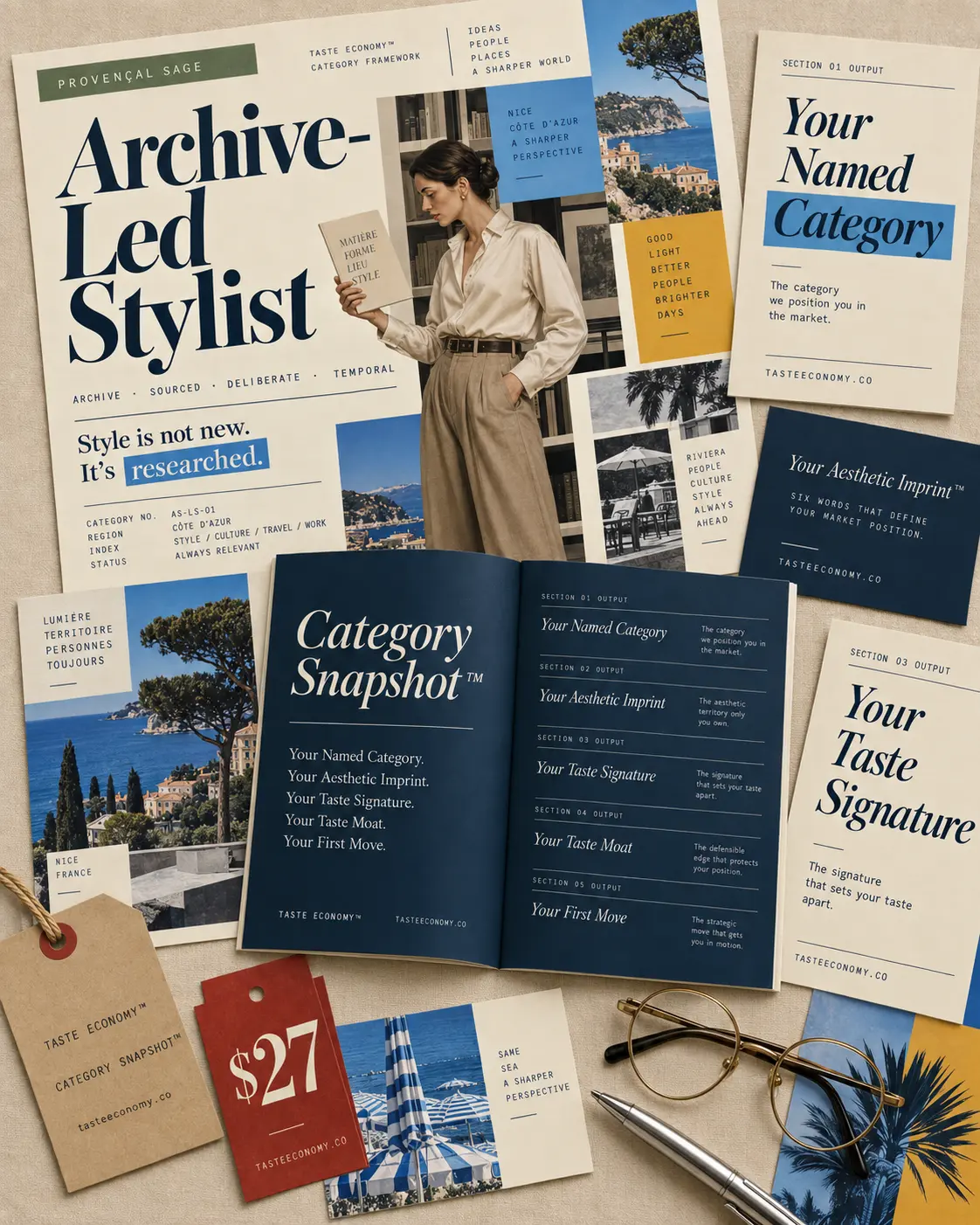
47 CATEGORIES NAMED SO FAR · YOURS HAS NOT BEEN READ YET
Your current title may describe one part of the work. It rarely holds the judgment connecting the rest.
That gap shows up when someone asks what you do and the answer takes a paragraph. It shows up again when a referral goes to the easier person to describe, or when a buyer compares your price with the wrong kind of provider.
The Snapshot looks beneath the list of skills for the choice that repeats across the work.
The result explains what the board is pointing toward, the evidence behind the read, and where to test it.
You also receive one provisional positioning sentence and a first evidence test.
Machine-assisted private hypothesis · Raydon does not personally review each Snapshot
THE MOODBOARD
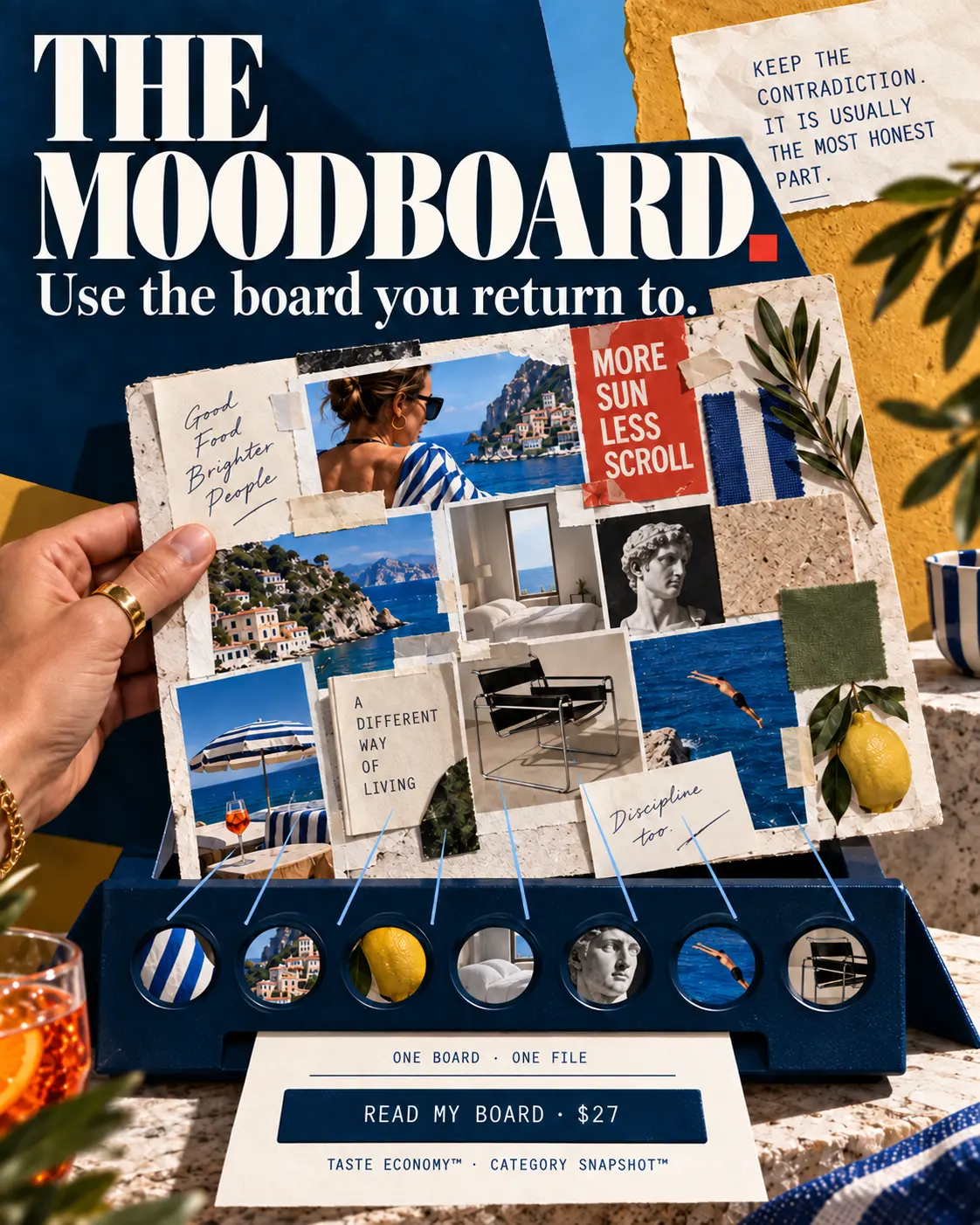
Use the board you keep.
A useful board can hold different disciplines, eras, materials, and references — it does not need to look consistent. The reading looks for the judgment beneath that range.
One moodboard works best: 3 to 8 images combined into a single collage, in one JPG or PNG. Don't have a board ready? Separate images work fine too — upload what you have.
Keep the contradiction. It often explains more than another perfectly matched image.
Do not upload confidential work without permission, private documents, sensitive personal information, or images of children.
THE READING LOOKS FOR THE JUDGMENT BENEATH THE RANGE.
Seven lenses examine the choices from different angles. The category comes out.
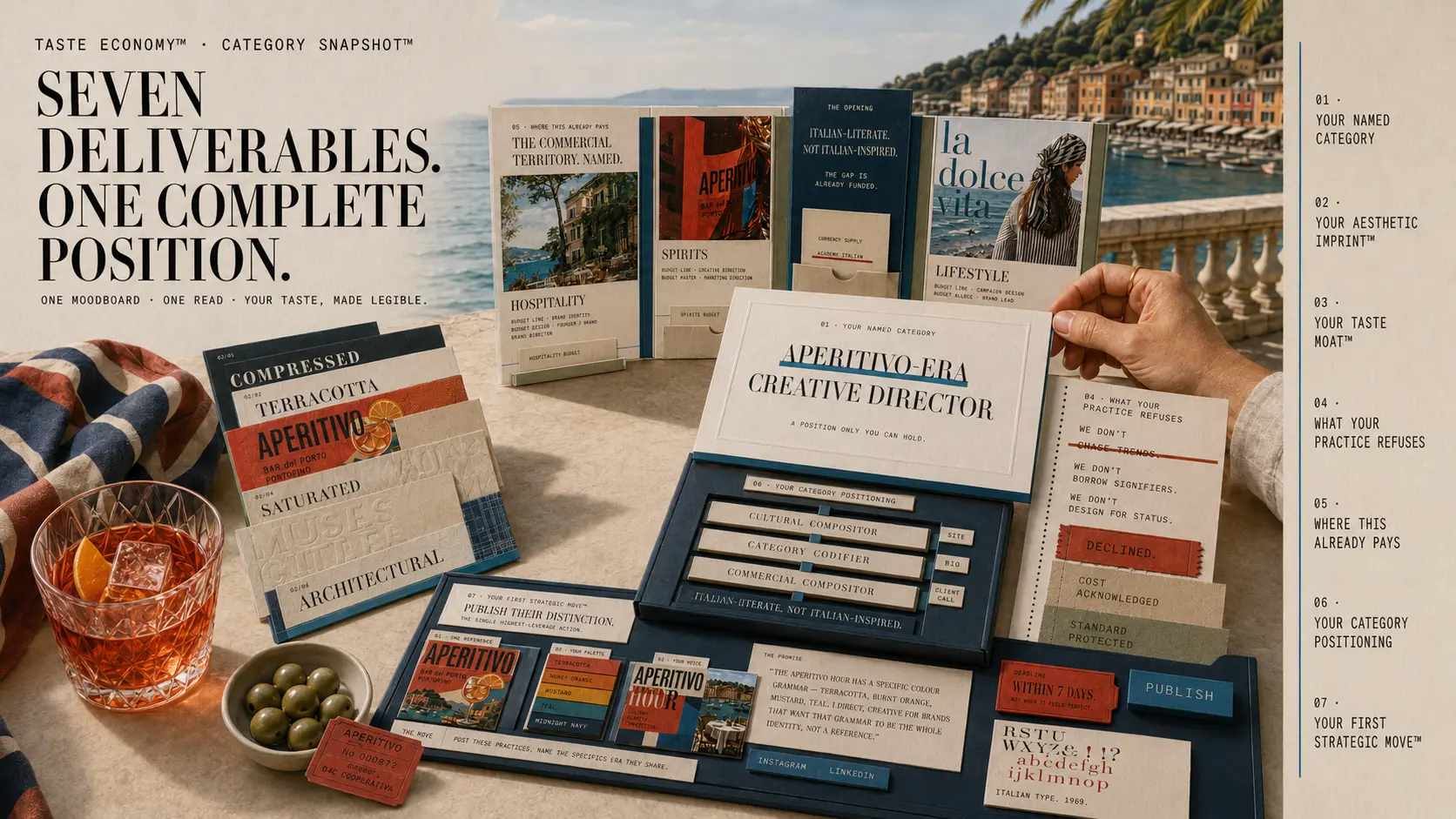
ONE BOARD · SEVEN LENSES · ONE PRIVATE HYPOTHESIS

There is a name for what your work keeps pointing at. You just haven't heard it yet.
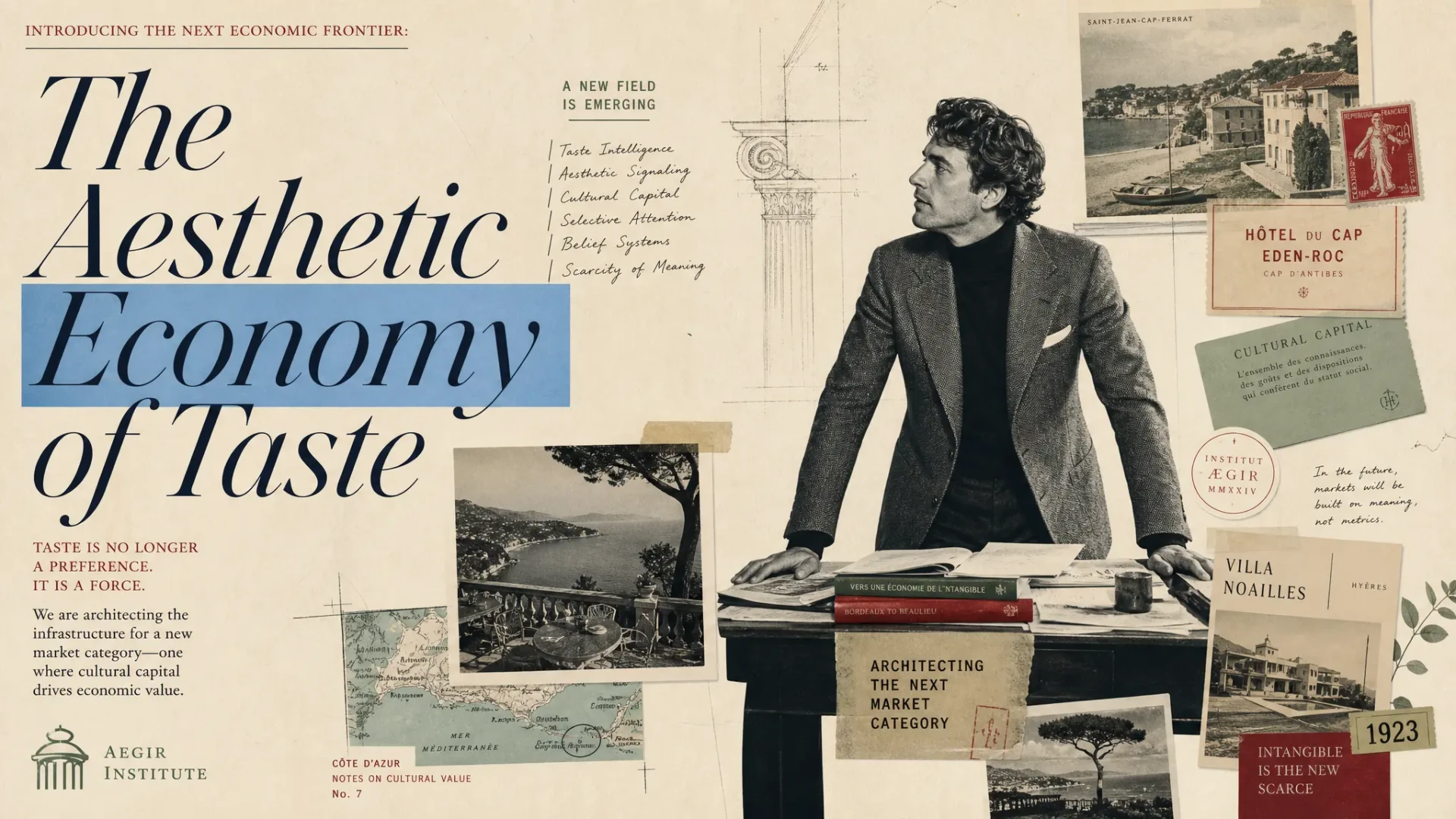
A moodboard records a series of private choices. The Seven Lenses examine those choices from different angles — what the board refuses, what interrupts its dominant pattern, what emotional register it holds, whether the references point to an absorbed lineage. Every name below came from one board read through that sequence. Yours is in here somewhere.
01 · Why I Built This
Nobody with range should have to explain it away.

RAYDON NGUYEN · HO CHI MINH CITY
RAYDON NGUYEN · HO CHI MINH CITY
Boutique advertising in Vietnam. Digital agency work. E-commerce. Then a senior creator management role at TikTok Shop, running a national roster. Design in between. Writing throughout. Many rooms. No ladder.
In every one of those rooms I kept running into the same moment. Someone asks what you do. The person before you says four words and everyone nods. You take a breath and start building a paragraph.
I had two words available: generalist, jack of all trades. Neither one names a thing. Each marks an absence — no specialisation, no single lane. The failure was never the range. It was the words.
What I had not tried was naming what sits underneath. Not what I do. What I can see.
Being unnamed cost me slowly. A rate I did not ask for. A referral nobody could make in one sentence. Work that went to someone more legible and less good.
Competent output is abundant now and getting cheaper every quarter. What is not abundant is judgment — the specific, accumulated sense of what is worth doing. And judgment is invisible until it is named.
The years ahead do not reward the most skilled. They reward the most legible.
Stop naming the skills. Name the taste underneath them. The skills stop reading as indecision the moment the taste has a name.
I built the Seven Lenses to read that judgment through the choices people already keep — images, references, materials, places, cultural signals that survive private selection. The system makes an immediate first reading possible. My direct involvement remains visible where it enters. I will not imply that I reviewed a result when I did not.

Raydon Nguyen
Founder, Taste Economy™
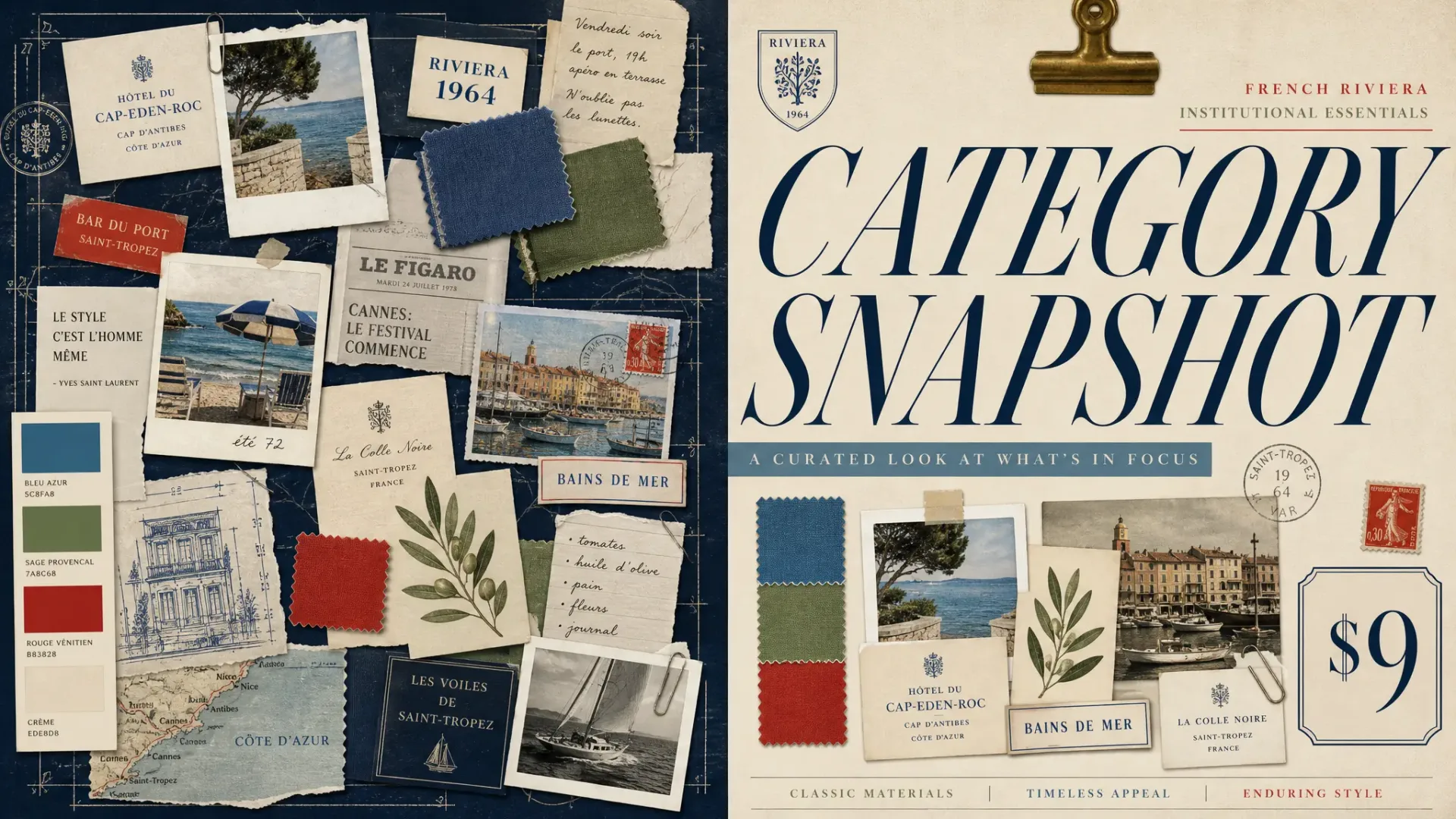
02 · The Problem
The work makes sense when people can see it. Explaining it is harder.
A title records the work you were hired for. A moodboard often shows the choices that recur across different jobs. What the board keeps, what it refuses, and where the proposed category should be tested — those are the three questions the Seven Lenses answer.
The result is not a label for your skills. It is a category hypothesis drawn from the evidence on your board, with its boundary, its test setting, and one sentence to take into a real conversation.
The silence around it was the problem. Not the range.
03 · The Seven Lenses
The method reads the choices behind a moodboard.
A moodboard records a series of private choices. The Seven Lenses examine those choices from different angles.
01 · THE REFUSAL
What the board repeatedly leaves out, even when that choice limits the work it could accept.
02 · THE CONTRABAND
The reference that interrupts the dominant pattern and changes how the rest should be read.
03 · THE PROTAGONIST
The particular way of noticing that appears across the board.
04 · THE TEMPERATURE
The emotional register of the board, including its pace, distance, and intensity.
05 · THE DURABILITY TEST
Whether the references point to an absorbed lineage or a surface that may pass quickly.
06 · THE ENEMY
The kind of brief or cultural force this taste cannot support without losing its meaning.
07 · THE MARKET SIGNAL
The adjacent commercial setting where this judgment is worth testing.
The system identifies the strongest supported direction. It does not average the whole board into an elaborate title.
04 · Example Result
Your result includes the reasoning behind the proposed name.
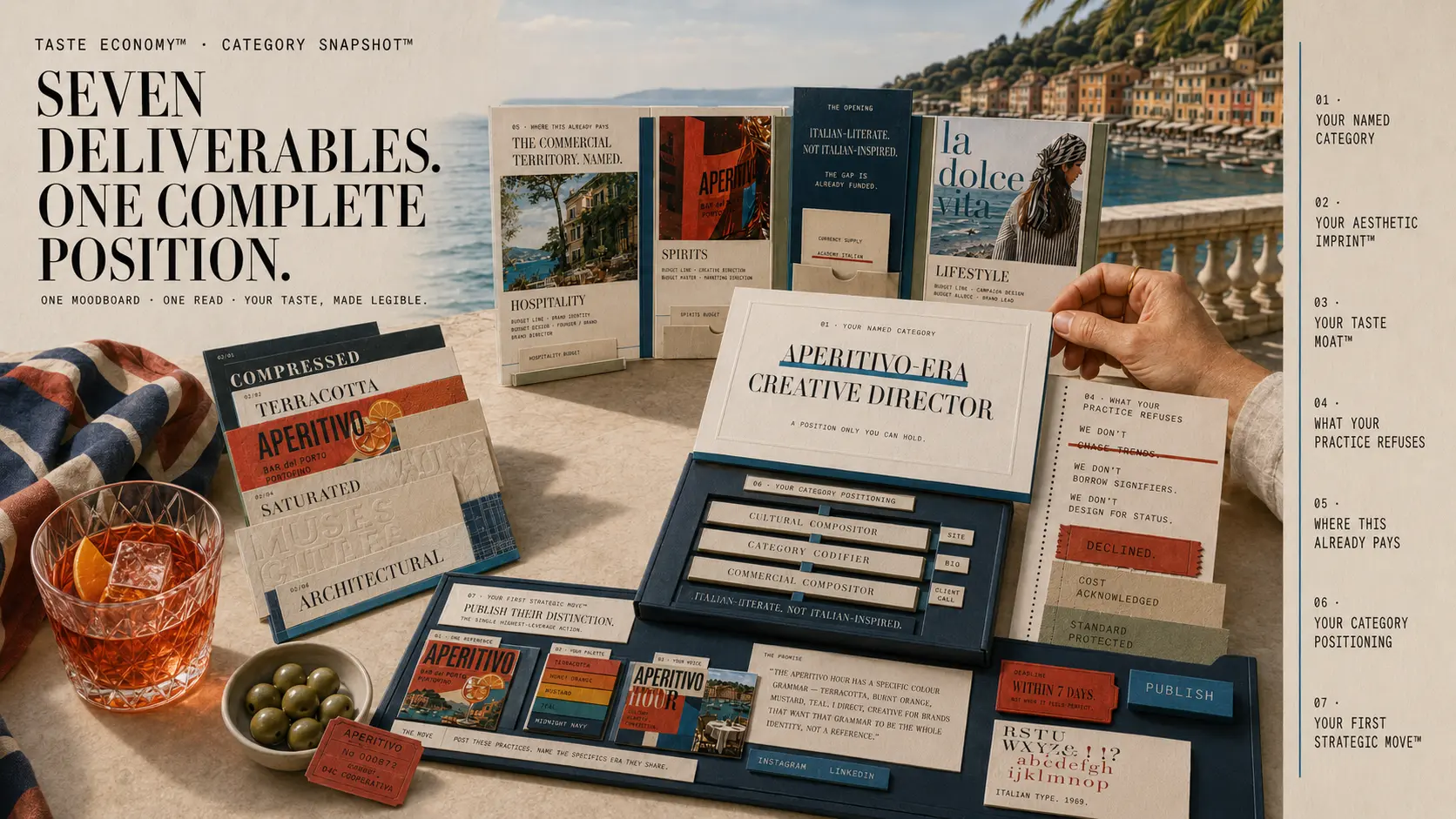
The example below comes from a test board. It shows the product experience and is not presented as a customer outcome.
The Input

MOODBOARD VIA AGUSTIN GOROSO / PINTEREST
The Output
A REAL SNAPSHOT, UNEDITED
METHOD DEMONSTRATION · TEST BOARD READ
THE READ
This board, credited to agustin goroso, holds three distinct type specimens — a red-and-blue geometric alphabet, a compressed heavy grotesque, and the Sunblum Typeface announcement — and treats each one as a cultural artifact, not a tool. What is absent is anything thin, neutral, or restrained: no Helvetica precision, no greige, no stripped-back understatement. What you chose to keep is the other Italian tradition — terracotta and burnt orange, Negroni culture, Portofino harbourfront, a Roman café at noon, a Vespa in the Piazza — chromatic, muscular, and firmly located in the post-war boom before minimalism won the argument. This was not a varied taste. It was a sustained refusal of polished, quiet Italy in favour of the version that still knows what the inside of a 1968 Italian interior smells like. There is a category for what sits at the centre of that refusal.
CATEGORY HYPOTHESIS
Aperitivo-Era Creative Director
Working language. Keep only what your work and real buyer response can support.
WORKING POSITIONING
Alessandrio Creative Studio does creative direction and graphic design for brands that want to look and feel like the most specific version of 1960s–70s Italian culture — bold colours, expressive type, and a real sense of place.
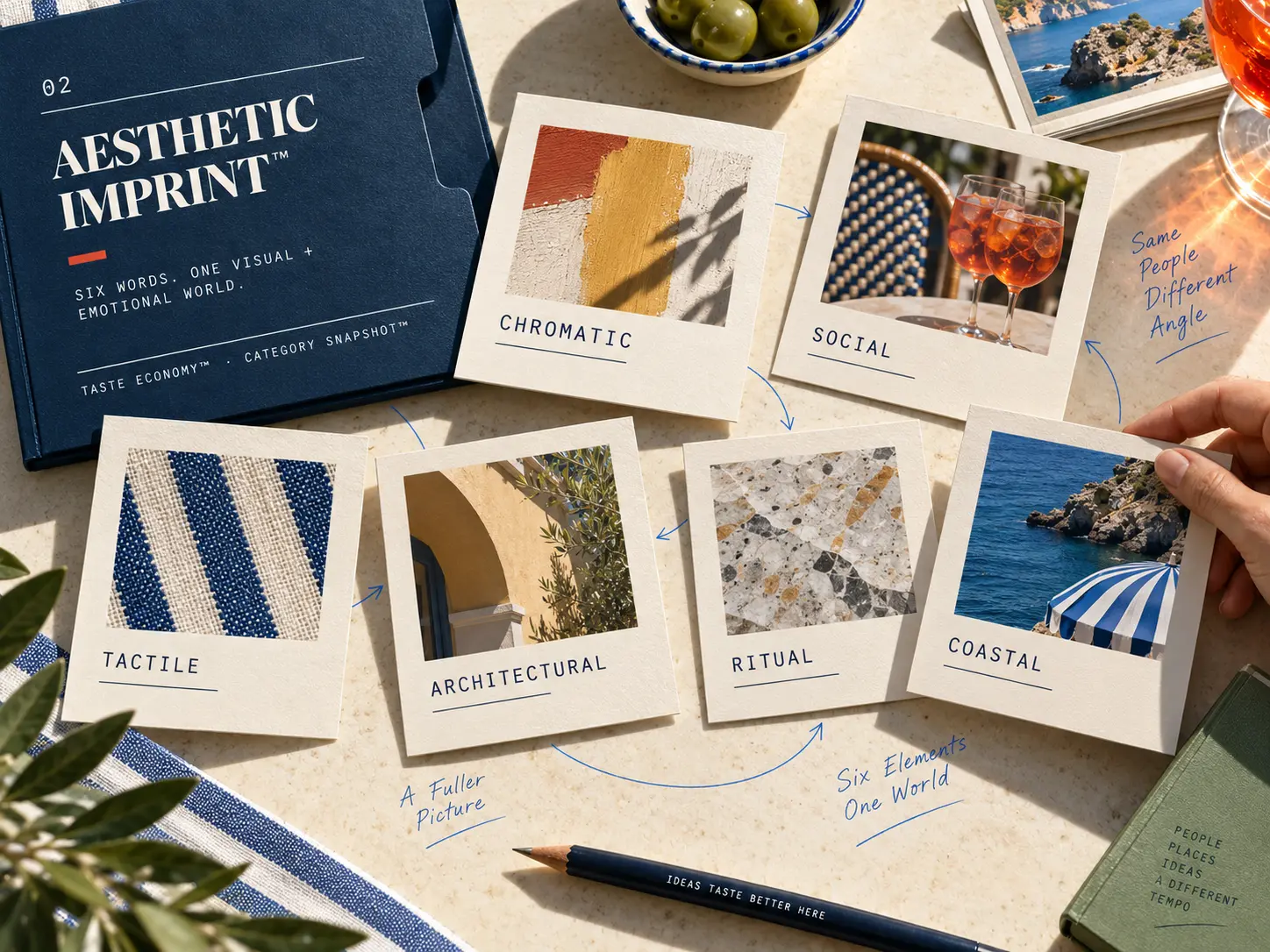
AESTHETIC IMPRINT™
Compressed · Terracotta · Aperitivo · Saturated · Muscular · Architectural
POTENTIAL TASTE MOAT™
The chromatic, typographically expressive strain of mid-century Italian visual culture is not the same tradition as Italian modernist rationalism, and it is not the same as contemporary Italian luxury — and most designers cannot tell the three apart. This board holds all three distinctions without labelling any of them. That kind of fluency does not accumulate quickly; the references that make it legible are the ones most people skip on the way to the canonical names.
FOR THE CONVERSATION
Alessandrio Creative Studio knows the specific era and register of Italian visual culture that most Italian-inspired work misses entirely, and that difference shows up immediately in the colour, type, and cultural logic the work produces.
REFUSAL TO TEST
The brief that arrives as “Italian, you know — clean, minimal, timeless” and resolves into greige and a Garamond derivative. That version of the aesthetic is available from almost anyone who has been to Milan once, and declining it is what keeps the rest of the work credible.
WHERE TO TEST THIS
These are adjacent buyers and budget lines to investigate. The reading does not prove demand for this name or for your work.
The aperitivo and spirits category — restaurants, bars, and beverage brands building identity around Italian cultural specificity — buys this kind of work under brand identity and creative direction budget lines. Lifestyle and travel brands positioning against Scandinavian minimalism are the adjacent territory. What the current supply delivers is surface Italian: a Vespa illustration, a terracotta swatch, a word like “dolce” — without the internal logic of the era that made those things cohere. That gap is the opening.
THE BOUNDARY
Alessandrio Creative Studio directs creative work rooted in the chromatic, typographically bold tradition of mid-century Italian graphic and material culture — the era and register most Italian-inspired design gestures at without being able to own.
Alessandrio Creative Studio brings a specific aesthetic standard to clients who need Italian cultural identity built with genuine depth. The work draws on a precise graphic and material tradition — compressed type, saturated colour, aperitivo-hour sociality — and translates it into brand identity and creative direction that holds up because it has a real source, not a mood. The clients who benefit most are in hospitality, spirits, and lifestyle, and they are currently being served by work that uses the surface of Italian culture without understanding the grammar underneath it. That grammar is what Alessandrio Creative Studio supplies.
DOES NOT MEAN
Alessandrio Creative Studio makes brands look like they genuinely come from a specific Italian tradition — not Italian-inspired, Italian-literate.
FIRST EVIDENCE TEST™
Complete the evidence collection and next action before you generate more language around the proposed category.
THE ACTION
Post the colour palette swatches from this board alongside one Italian reference image and one piece of your own work, naming the specific era both inhabit — on Instagram or LinkedIn.
Working language. Keep only what your work and real buyer response can support.
WORKING POSITIONING
“The aperitivo hour has a specific colour grammar — terracotta, burnt orange, mustard, teal. I direct creative for brands that want that grammar to be the whole identity, not a reference.”
THE DIRECTION TO TEST
You were not making work across too many references — you were building fluency in a tradition that most people flatten into a single adjective. You have the name now, and a name only does its work once it is used.
Machine-assisted private hypothesis. Raydon does not personally review each Snapshot.
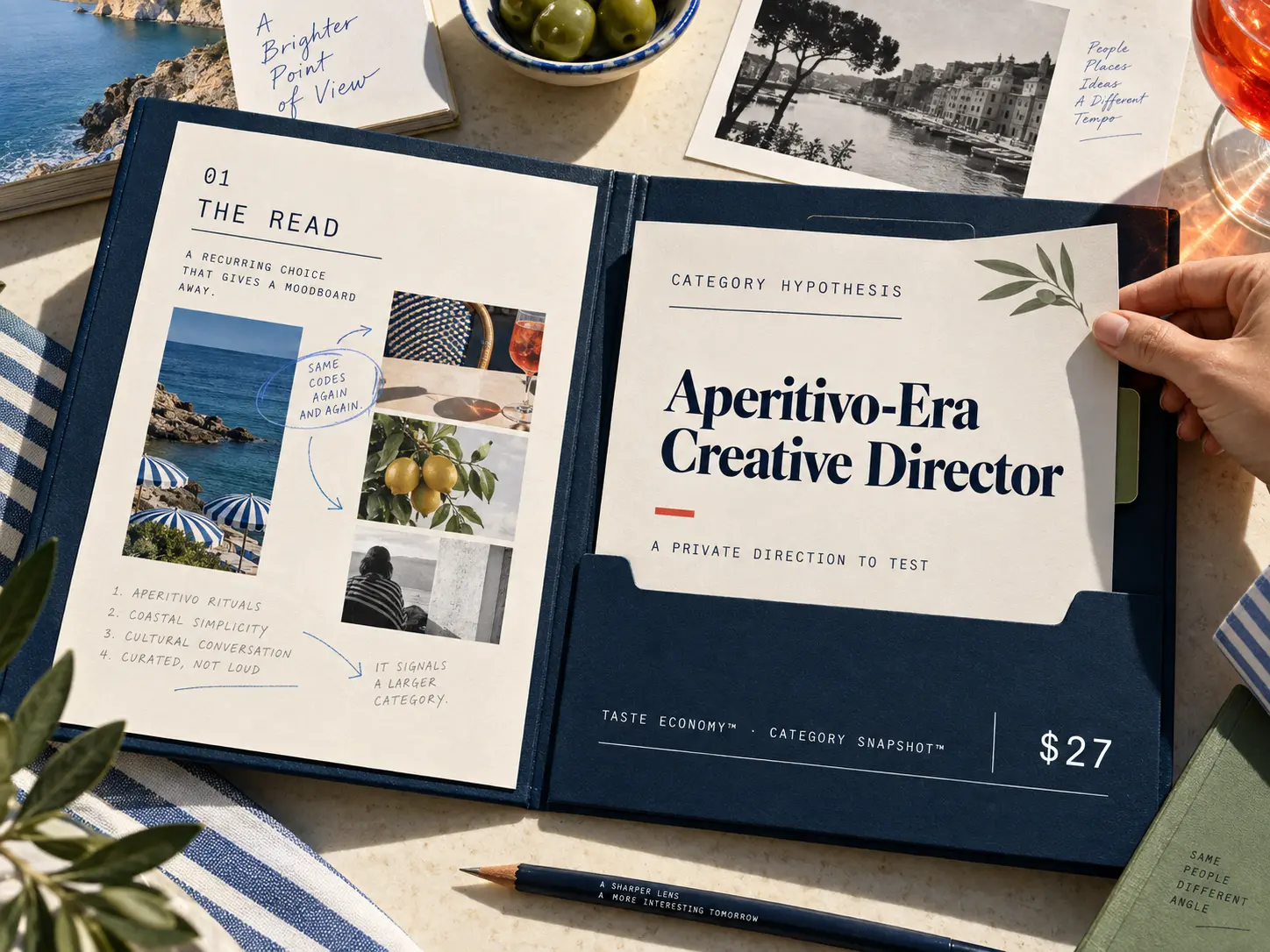
01 — 02
The Read · Category Hypothesis
A short account of the recurring choice that gives the board away.
One grounded working name. A direction to test, not a final ruling.
03
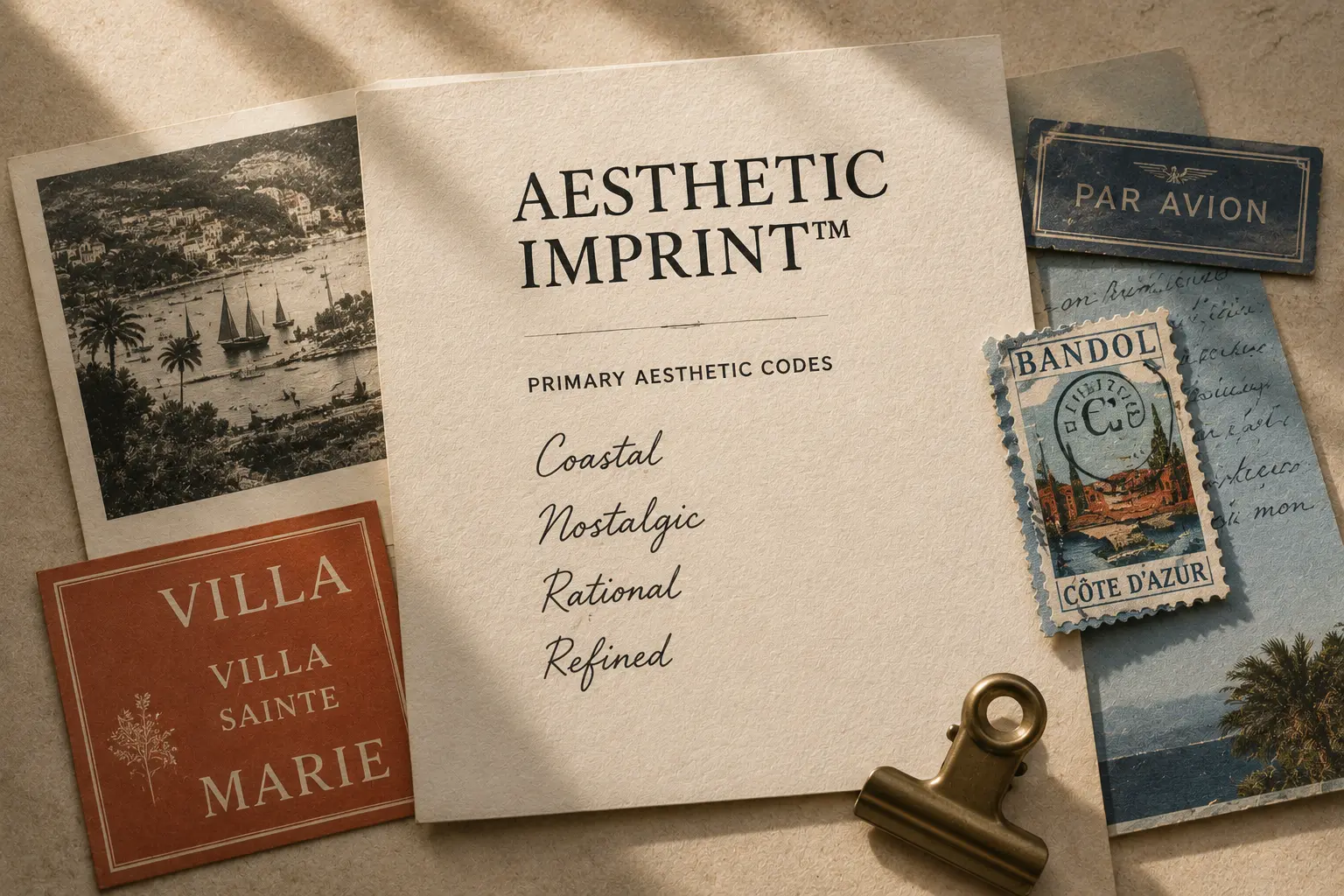
Aesthetic Imprint™
Six standalone words that hold the visual and emotional world of the board.
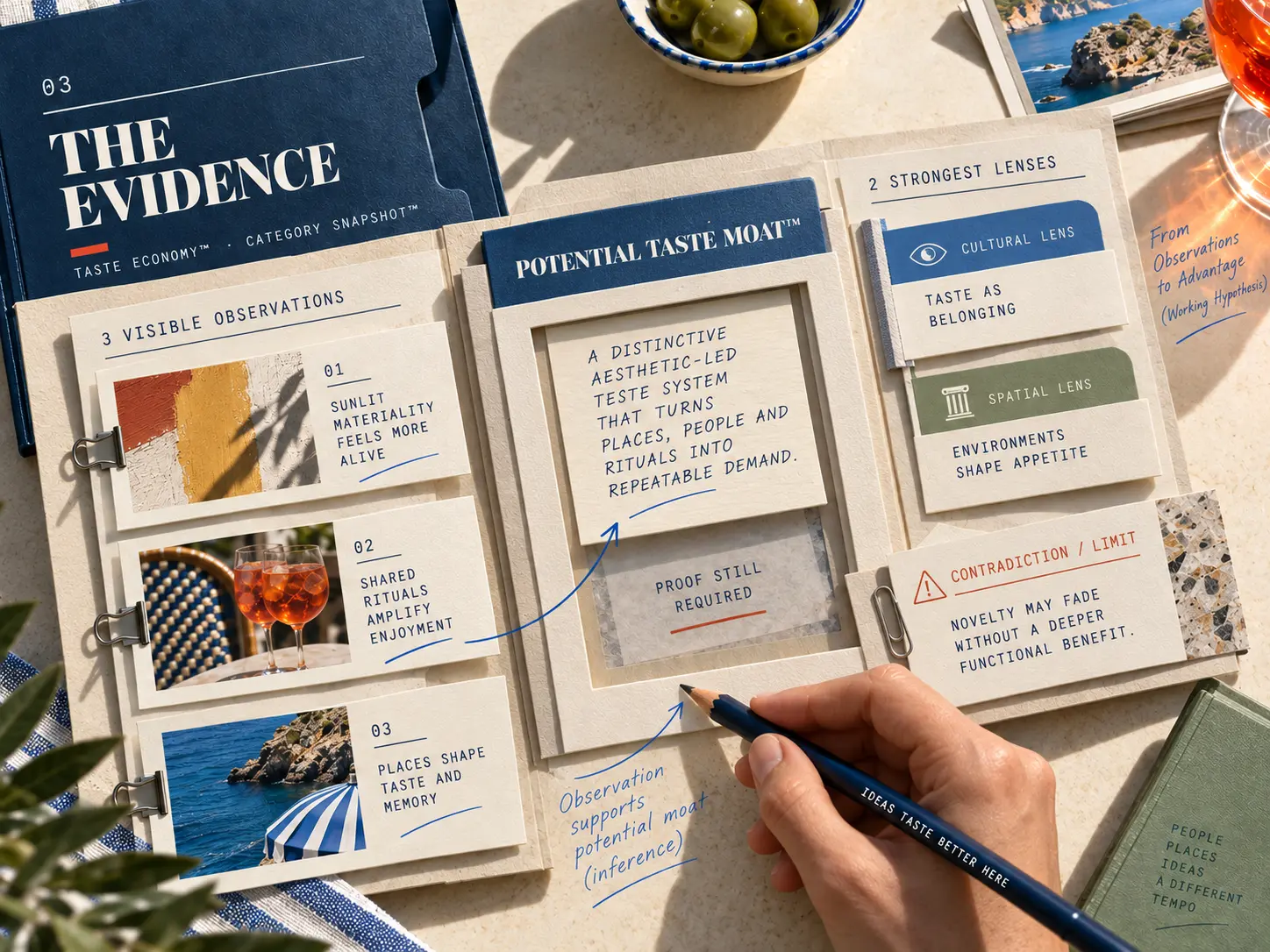
04
The Evidence
Three visible observations, the two strongest lenses, a potential Taste Moat™, the proof still required, and one contradiction or limit.
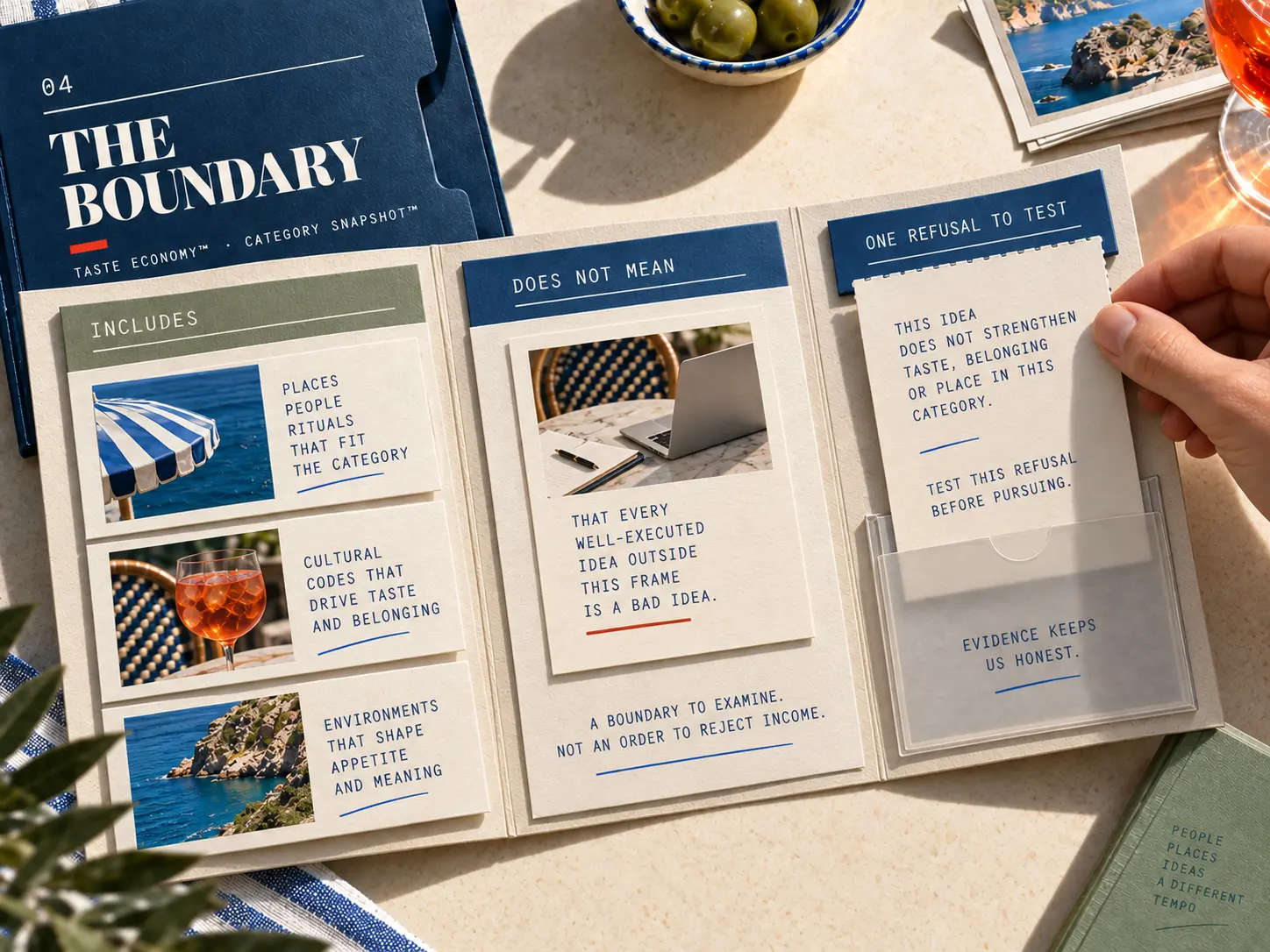
05
The Boundary
What the proposed direction includes, what it does not mean, and one refusal to test.
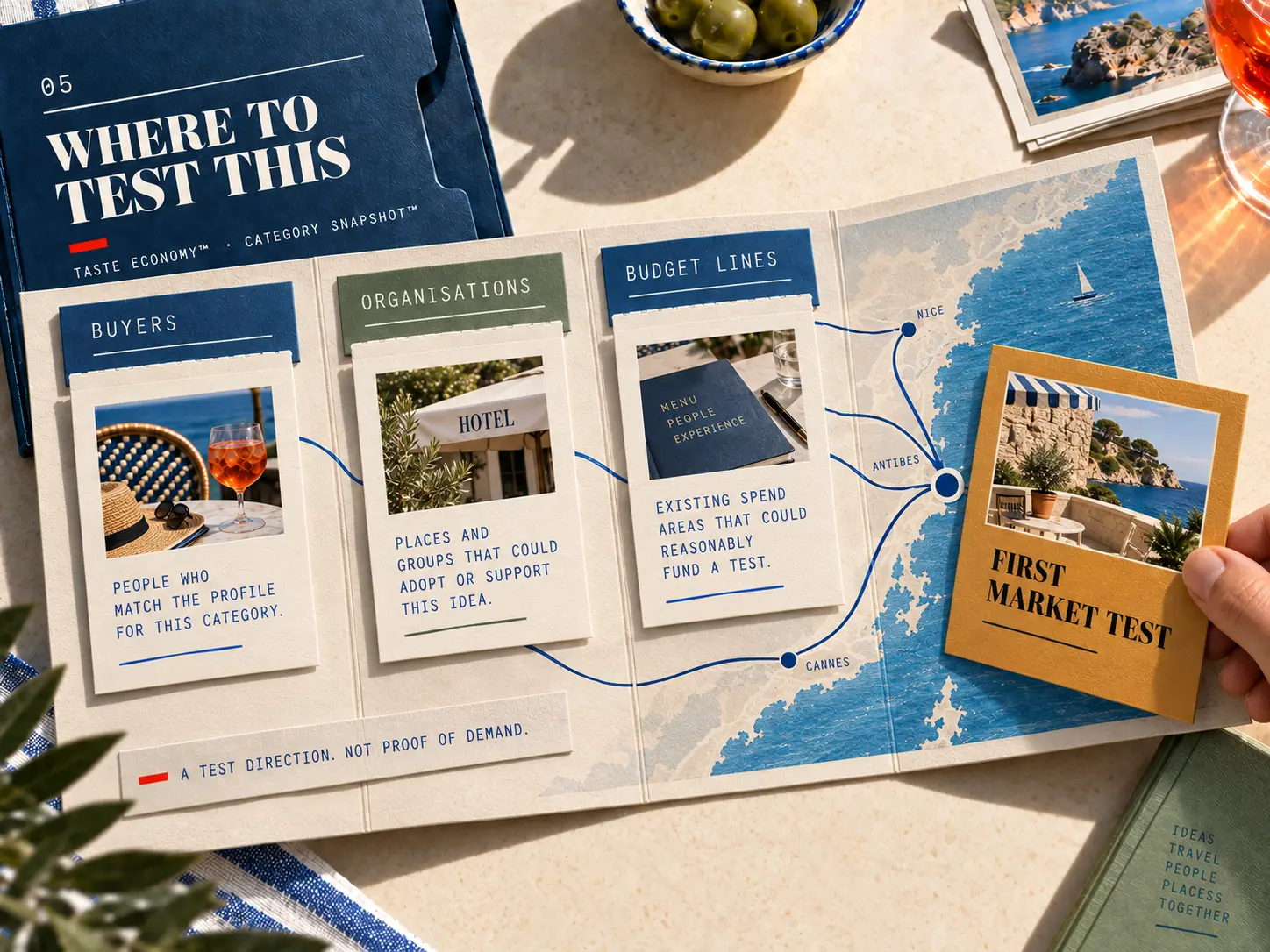
06
Where To Test This
The kinds of buyers, organisations, and budget lines where a related need may already exist. A test direction, not proof of demand.
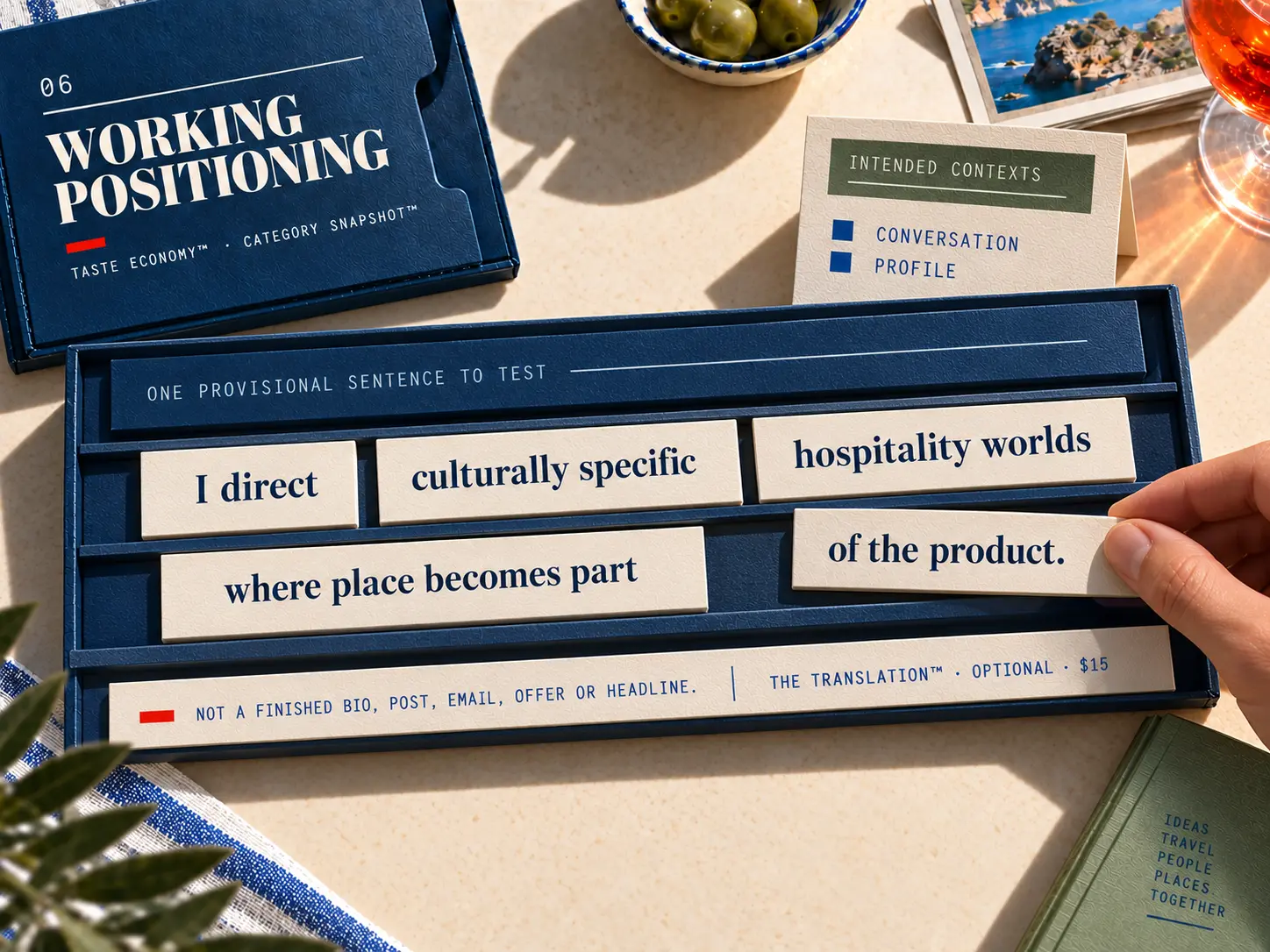
07
Working Positioning
One provisional sentence for a conversation or profile.
Not a finished bio, post, email, or headline. A working sentence to test before you build more language around it.
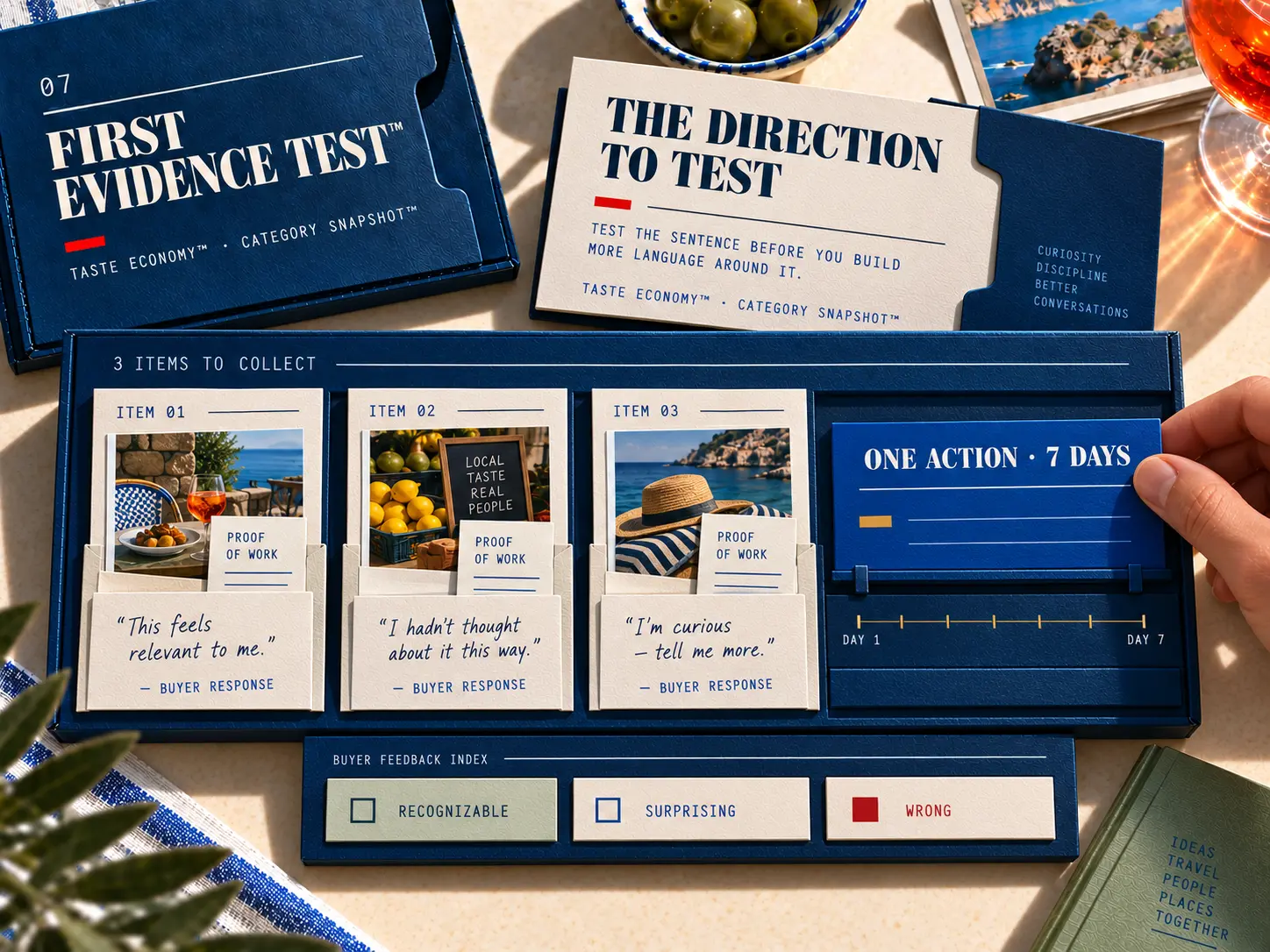
08
First Evidence Test™
Three items to collect and one action to complete.
Complete the evidence collection before you generate more language around the proposed category.
What You Keep
Your result includes the reasoning behind the proposed name.
When the reading is complete, it produces a saved result card. Your named category, the six-word Aesthetic Imprint™, the evidence, the boundary, the positioning, and the first evidence test — typeset and saved at a link that is yours to return to.
Save the card before you use the positioning sentence. Compare readings instead of generating names until one feels impressive. The card is the thing you build on, not a receipt you close.
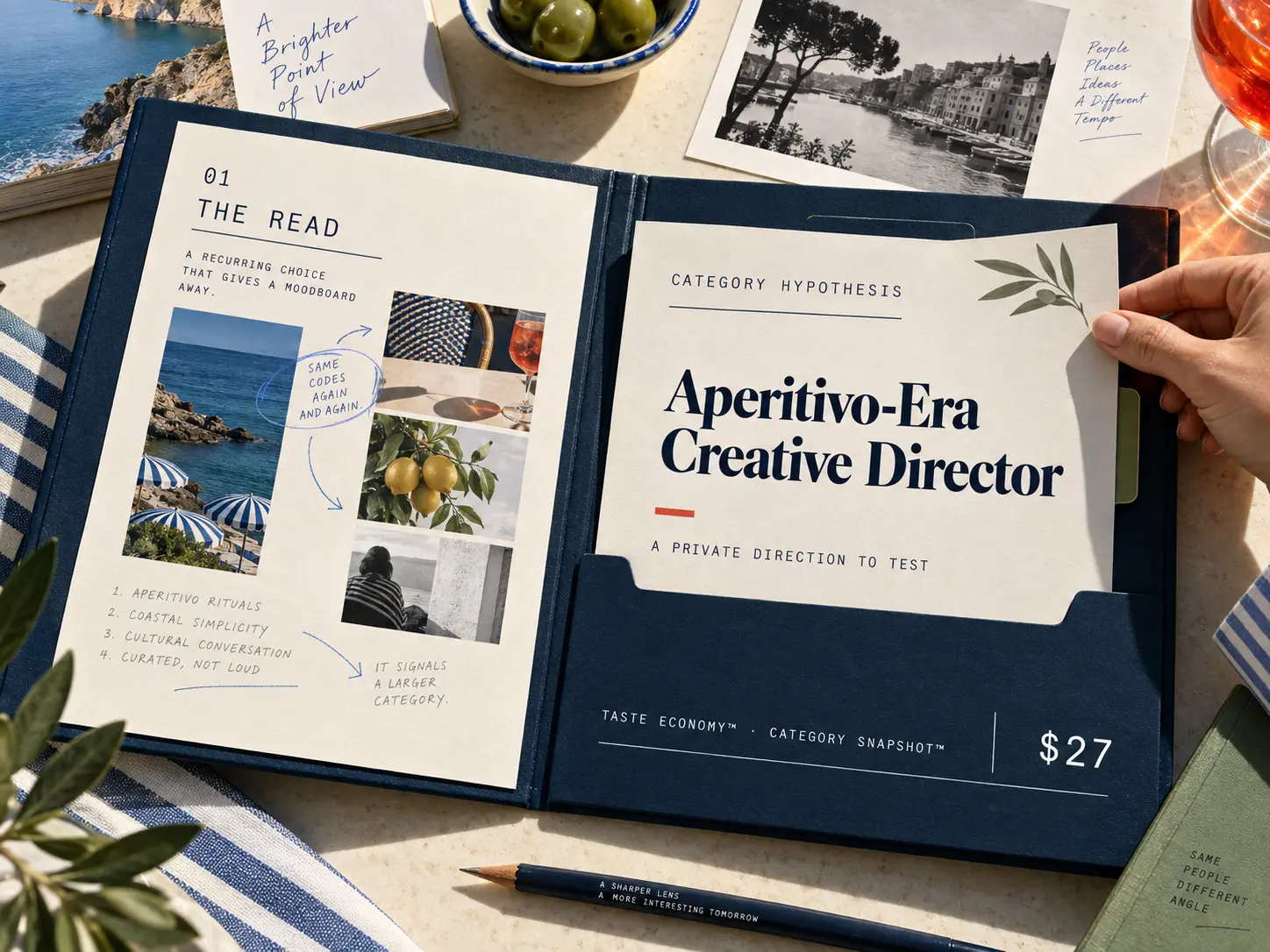
CATEGORY HYPOTHESIS
Aperitivo-Era Creative Director
PRIVATE CATEGORY HYPOTHESIS · BUILT ON THE SEVEN LENSES METHOD™
05 · How It Works
How It Works
01 · BOARD IN · 02 · SEVEN LENSES · 03 · PRIVATE HYPOTHESIS OUT
01
Complete the secure checkout
Complete the secure checkout, then open the tool to begin.
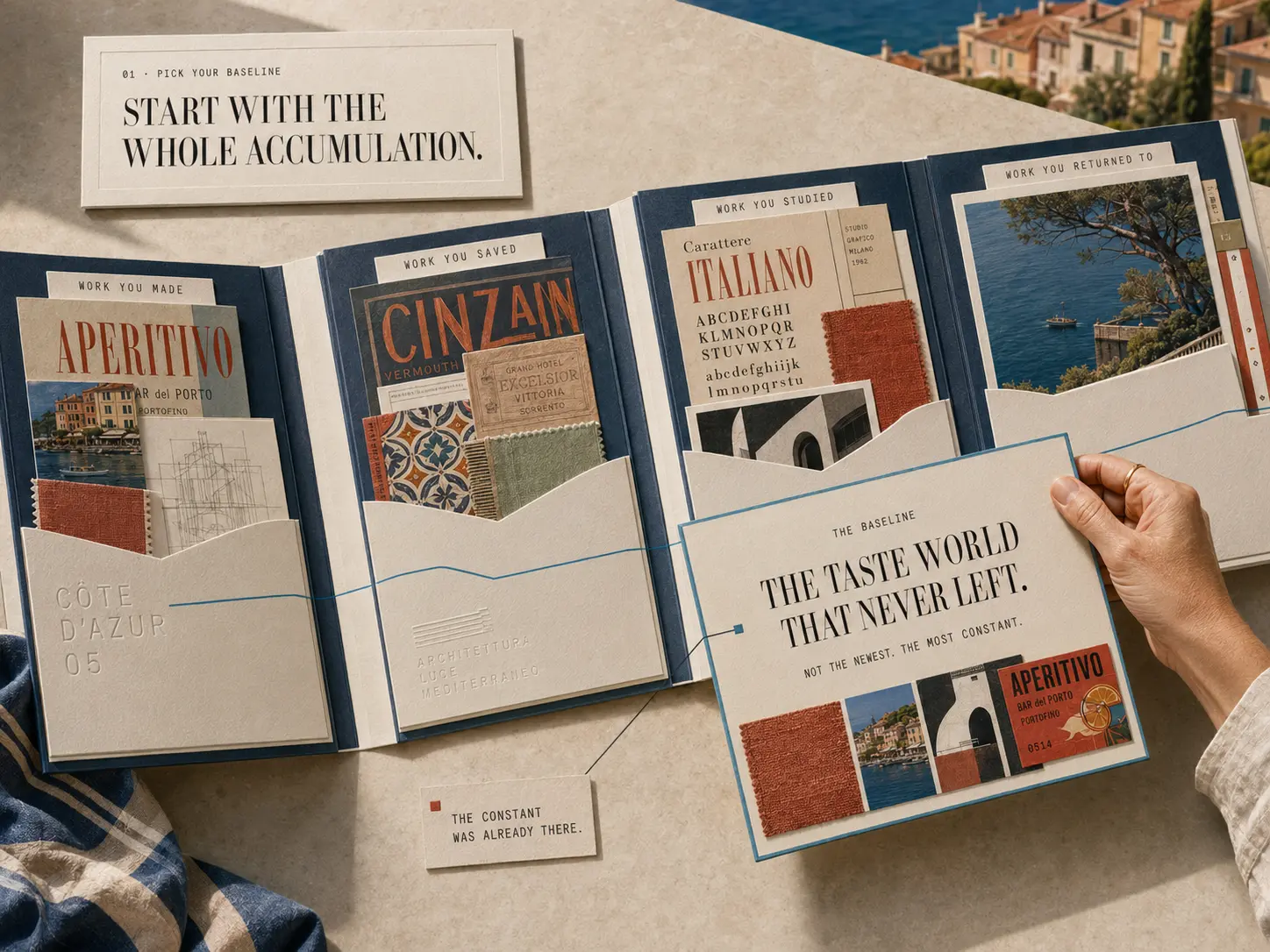
02
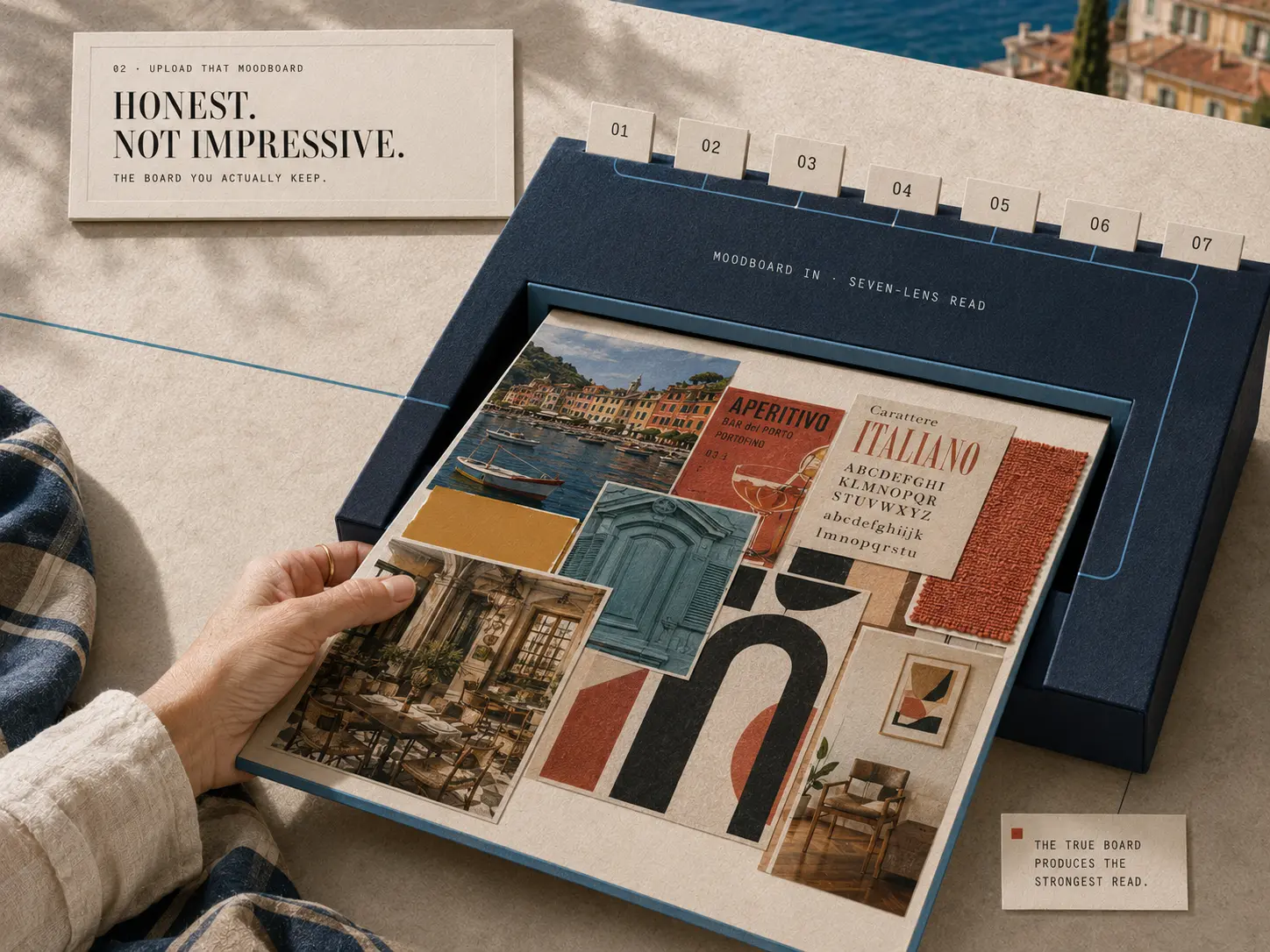
Upload one honest board
One moodboard works best: 3 to 8 images combined into a single collage. No board ready? Separate images work fine too. Include your own work and outside references you have returned to more than once, and keep the contradiction — it often explains more than another perfectly matched image. Add your name, current work status, and one sentence of context.
03
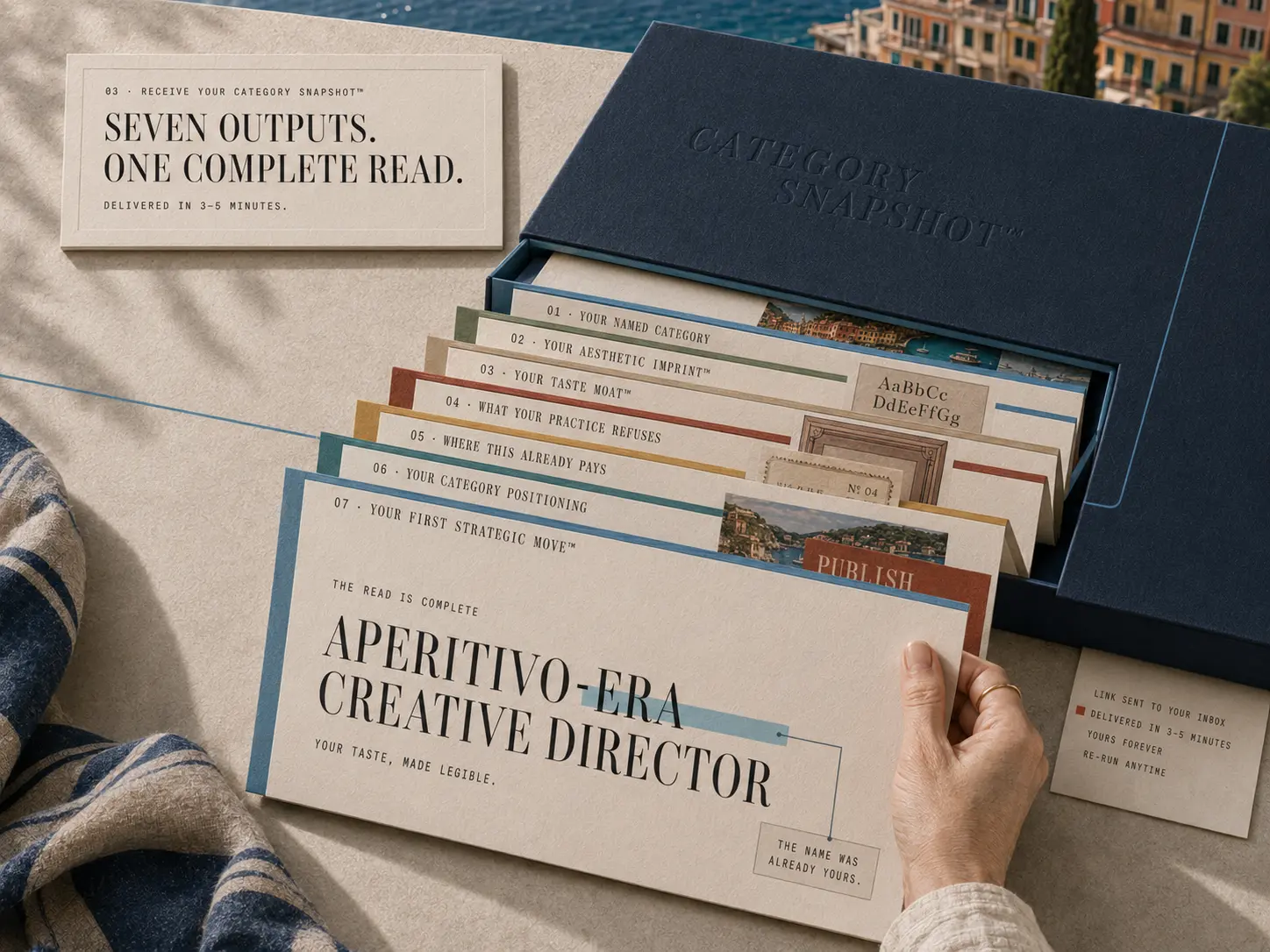
Save your completed Snapshot
The system applies the Seven Lenses Method™ and returns a private category hypothesis with its reasoning, boundary, test setting, and first evidence test. Save the result card. Mark it Recognizable, Surprising, or Wrong. Test the positioning sentence before you build more language around it.
What To Upload
Use the board you keep.
A useful board can hold different disciplines, eras, materials, and references — it does not need to look consistent. One moodboard works best: 3 to 8 images combined into a single collage. Don't have one ready? Separate images work fine too. Keep any real contradiction — it often explains more than another perfectly matched image.
Option A
Mostly work you made or directed
The Snapshot reads the taste running underneath your output and names the position it points to. Use work you still recognize as yours, not work that paid best.
Option B
Mostly references you saved
The private board, the screenshots, the images that stopped you scrolling. What you are drawn to is as accurate a signal as what you have produced. Often more.
Either works. The board only has to be honest, not impressive. A board assembled to look a certain way produces a weaker read than the messy, private one you already keep.
Do not upload confidential client work without permission, private documents, sensitive personal information, or images of children.

Run It When
- →You are updating a portfolio, CV, or profile and the headline field still takes a paragraph.
- →You have a discovery call or pitch this week and need one sentence that holds before the second clause.
- →You are rewriting your bio and every version sounds like a list of things you can do rather than a position you hold.
- →You are raising your rate and need a category to price against, not a list of services.
- →Your taste has shifted, the old label no longer fits, and you want to hear what the board says now.
06 · First Move
The first evidence test, named.
Three items to collect and one action to complete after your reading. Complete the evidence collection before you generate more language around the proposed category. The direction is provisional until evidence and buyer response can support more.
07 · The Categories
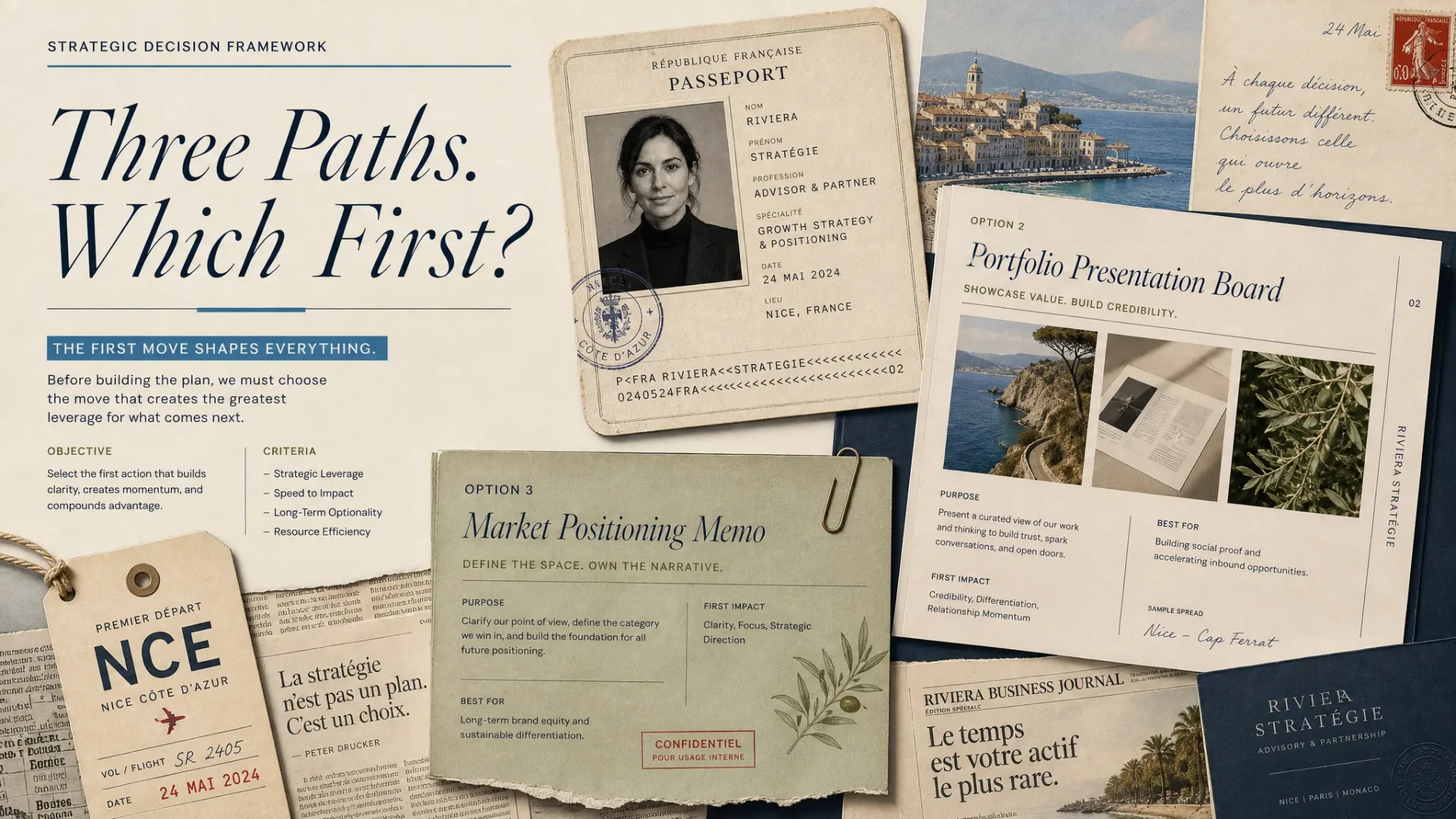
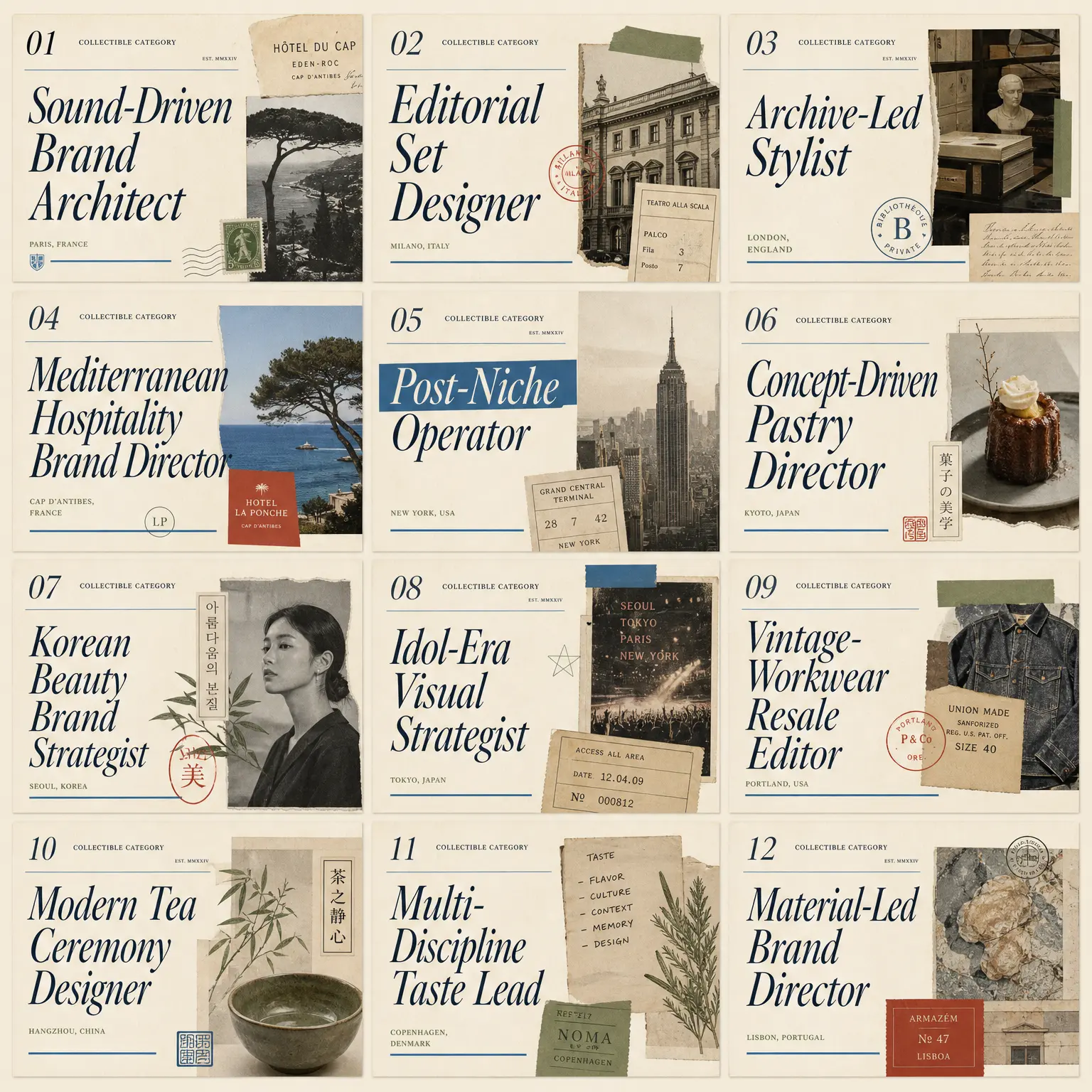
None of these existed as a job you could apply for.
Every name below was produced from one moodboard read through the Seven Lenses. None of them can be found on a job board, in a LinkedIn title menu, or in a list of services. Each one is a direction its owner can now test and hold. Yours is in here somewhere. You simply have not heard it yet.
47 Categories Named and Counting
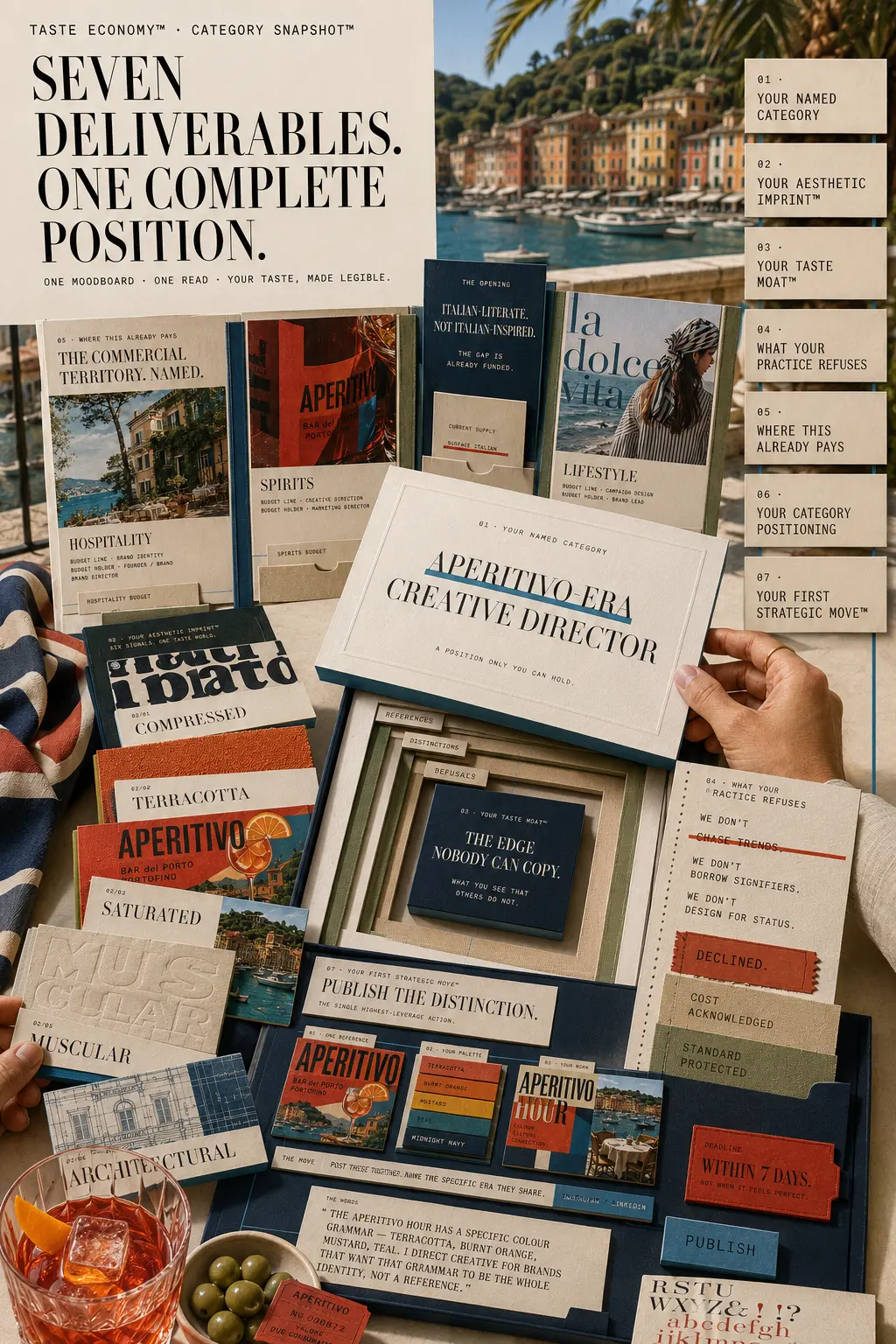
Twenty-seven dollars.
A private hypothesis and the reasoning behind it.
The Methodology
Anyone can prompt a model. The sequence is the product.
The Category Snapshot is built on Raydon Nguyen's Seven Lenses Method™. The proprietary move is treating the evidence on the board as the source, not the prompt. Seven lenses applied in a fixed order, with refusal logic and uncertainty rules that close the failure modes a general model leaves open. The moat structure is selected from what the board actually supports, not applied as a template.
Most tools start with the market and ask you to fit inside it. This one starts with what the board already holds and derives the category from that evidence. The order matters. A category built from market demand expires when the demand moves. A category built from your board does not.
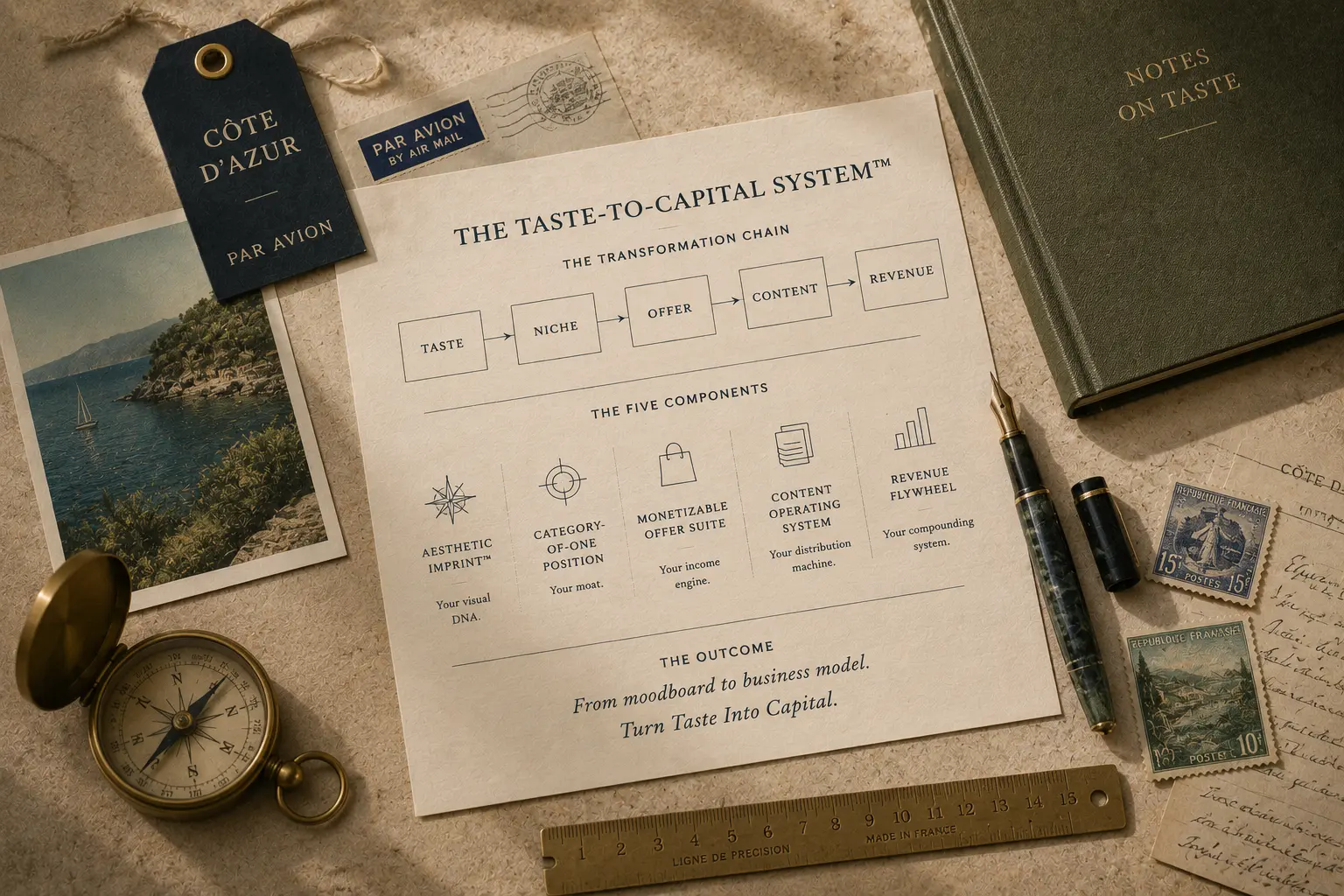
The Category Snapshot gives you one private reading to test. When you are ready to build the evidence beneath the name — offers, refusal, proof, first conversation — the Moodboard-to-Monetization Starter Kit ($49) picks up exactly where the Snapshot leaves off.
The Human Standard
How Raydon's method enters the reading.
Raydon Nguyen authored the Seven Lenses, the category rules, the refusal logic, and the quality standard behind the reading. The system applies those rules to the board you submit.
Raydon does not personally review or sign each $27 Snapshot. When human adjudication enters later, that involvement is stated clearly. The business never presents a machine-assisted result as a personal ruling from Raydon.
47 Categories Named and Counting
Every Category Snapshot™ is decoded through a proprietary methodology — seven lenses, applied in a fixed order, with the moat structure selected from what your board actually supports.
The Next Stage
You have your category name.
Now decide what it earns.
The Snapshot gives you a category hypothesis and one sentence to test. The Moodboard-to-Monetization™ Starter Kit ($49, Category Snapshot included) helps you test the category against your work, buyer, refusal, proof, and first offer.
Inside the Starter Kit ($49, Category Snapshot included):
- →A category manifesto and a Taste Moat™ you can say out loud in a live conversation
- →A three-tier offer stack, editorially named and priced on position rather than hours
- →A pricing doctrine: anchoring, framing, and the words to defend a premium rate
- →A 30-day proof plan that reframes your existing work through the category you just named
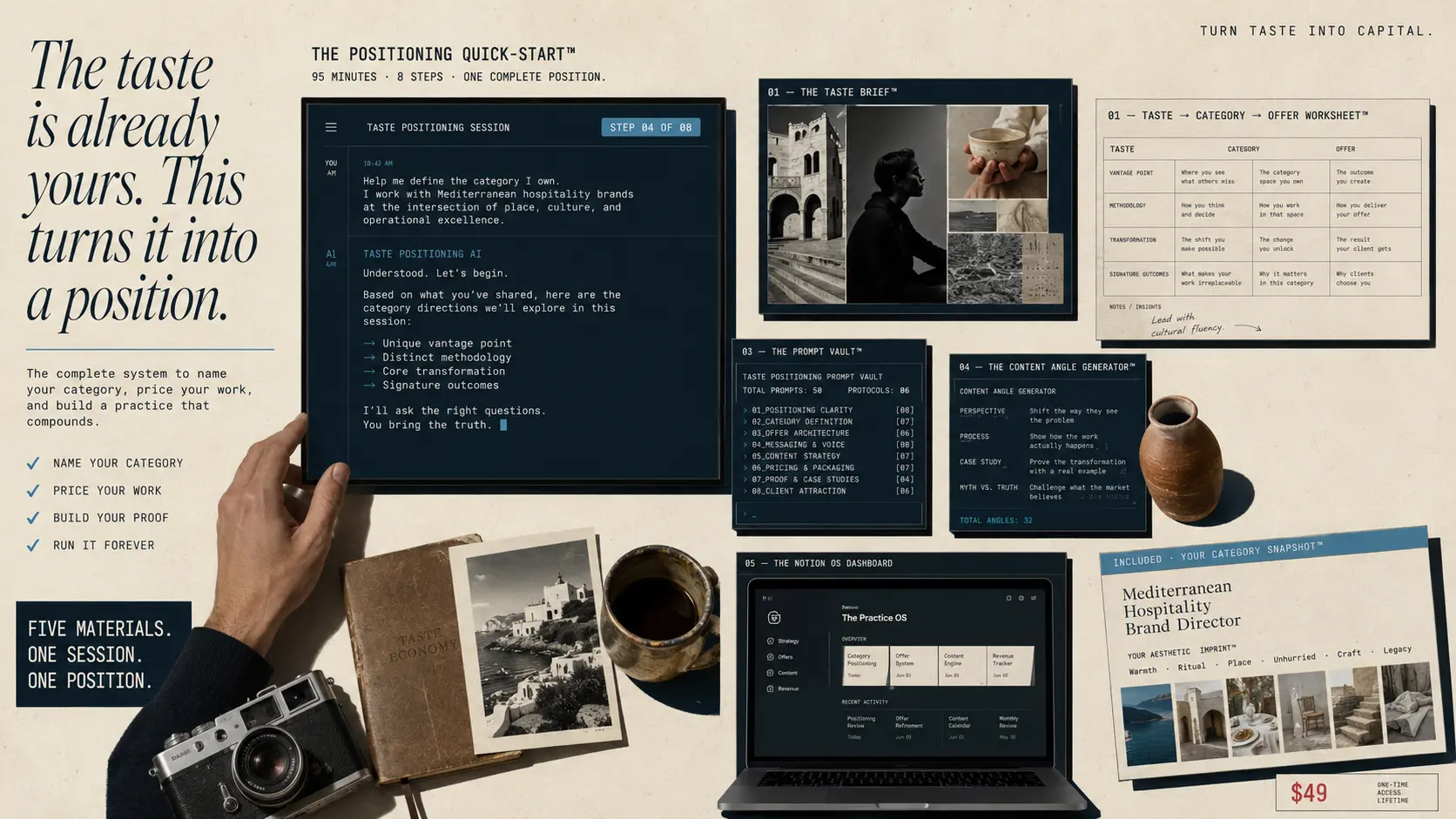
And the closing module: the session ends with a decision, not a document. Seven distinct architectures turn a named category into revenue — premium, product, voice, collaboration, studio, depth, and quiet. They are not equally right for you. The Kit runs your finished position through all seven and names the one that fits your actual pricing anchor, your actual category, and your actual tolerance for the cost each one carries. Every path has a cost. You will be told what yours is before you choose it.
The Snapshot names your taste. The Starter Kit decides what it becomes.
08 · Who This Is For
Start with the list that rules you out.
This is NOT for you if
- ×Your board was built to impress somebody. A board assembled for an audience reads thinner than the private one. Upload the true one, or wait.
- ×You are putting a board together tonight from what is currently trending. There is nothing underneath it yet.
- ×You have already found your category and are scaling it. You need operations, not naming.
- ×You want a registered claim or certification. A Snapshot is a private hypothesis to test, not a legal right or a promise of commercial results.
- ×You want a label generated in one pass. The Seven Lenses run a sequence and refuse weak answers. That takes the time it takes.
- ×You want someone else to hold the position. The Snapshot gives you the hypothesis. You still have to test it.
This is for you if
- →You have accumulated work across more than one discipline and no single title holds the judgment connecting it.
- →Someone asks what you do and the answer takes a paragraph. It has for years.
- →You are not deciding what to do. You have been doing it. What you have never had is the category.
- →You have watched work go to someone more legible than you, and known you were the better choice.
- →Your rate has been set by what people could understand about you, not by what you can actually do.
- →You have a board you have kept since before anyone paid you for any of this. It is still the most accurate thing about you.
- →You want one provisional direction to test before you build more language around it.
- →You have started to notice that competent-looking work is now everywhere, and that being good is no longer the same as being legible.
09 · The Guarantee
Treat this as a first reading.
The Snapshot reads one moodboard, so it can identify a strong pattern but cannot inspect a whole career. It also cannot verify demand, grant ownership of a phrase, or decide whether the evidence is sufficient for a public claim.
The Snapshot gives you a category hypothesis and one sentence to test. A registered claim comes later, after a human has examined the work, buyer, boundary, and evidence.
- Secure Stripe checkout — your payment is encrypted and instant
- Machine-assisted private hypothesis — Raydon does not personally review or sign each Snapshot
- Not a registered claim, certification, exclusive right, or promise of commercial results
- Built on a human-authored method — Raydon Nguyen wrote the Seven Lenses and the quality standard behind the reading
10 · FAQ
Honest Answers
Who is this for?
The Snapshot is strongest for someone with an accumulated body of work or references whose current title cannot hold the judgment connecting it. Someone early can still use the product, but the commercial parts of the reading will have less evidence to draw from.
What should I upload?
One moodboard works best: 3 to 8 images combined into a single collage, in one JPG or PNG. Don't have one ready? Separate images work fine too. Mix your own work with outside references you have returned to more than once. Keep any genuine contradiction. Do not assemble the board only to produce an impressive title.
Is the result made with AI?
The method is human-authored and the individual reading is machine-assisted. Raydon Nguyen created the Seven Lenses and the rules governing the output. The system applies them to your board. Raydon does not personally review or sign every Snapshot.
Why not use a general AI tool?
A general tool can produce plausible titles. The Category Snapshot uses a bounded method with rules for evidence, category naming, refusal, commercial testing, and uncertainty. You are buying access to that method and the saved result, not a claim that software has settled your professional identity.
Is the category name final?
No. It is a category hypothesis drawn from one board. Test it against your work and buyer response before you make a larger claim around it.
What does the Snapshot write for me?
The Snapshot gives you one provisional positioning sentence to test. It does not create a finished bio, spoken introduction, social post, outreach email, offer names, content directions, or profile headline. The optional Translation™ ($15) adds guided prompts for those assets.
What if the reading feels wrong?
Mark it Wrong and tell us which visible detail or inference failed. If the result is empty, corrupt, or visibly unrelated to the board, contact support. We will restore access, provide a replacement reading, or refund the purchase. Disagreement with a hypothesis is useful feedback, but it is not automatically a technical failure.
Is my board published anywhere?
We do not publish Snapshot work or add it to any public register unless you submit it through a separate process. Your submitted moodboard and completed result cards are held privately. Do not share your result link with anyone you would not want to view your reading.
What is The Translation™?
The Translation™ is an optional $15 addition at checkout. It gives you seven guided prompts that turn the completed Snapshot into editable drafts — a short bio, spoken introduction, first post, outreach email, three offer-name directions, five content directions, and a profile headline. It does not validate the hypothesis or register a claim.
The name is already in the moodboard. It just needs reading.
You already have the input — the board you have been keeping since before anyone paid you for any of this.
Upload one honest moodboard. Receive a private category hypothesis with its reasoning, boundary, test setting, and one sentence to test. $27.